
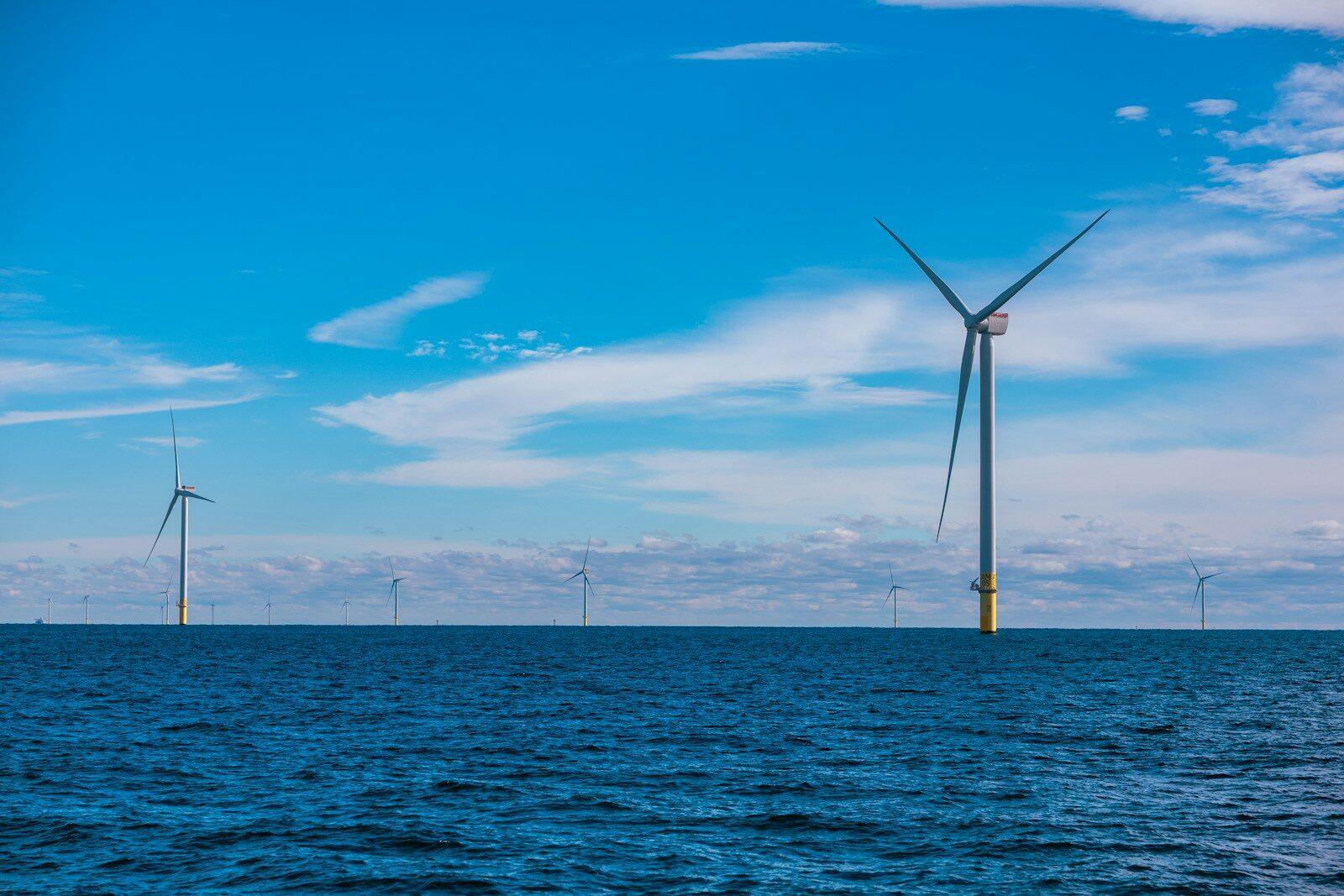
Offshore energy infrastructure projects consistently underperform because engineers and investors underestimate the compounding effects of marine corrosion, weather delays, and supply chain isolation. The core issue is that most project frameworks are designed for land-based logic applied to deep-water conditions. When those mismatches go unaddressed, the result is cost overruns, structural failures, and stalled energy delivery at scale.
Building platforms in open water is not a variation of land-based construction — it is a different discipline entirely. Offshore energy infrastructure 2026 faces a precise set of compounding risks that standard engineering frameworks were never designed to absorb. Uppalapadu Prathakota Shiva Prasad Reddy, Chairman of Premidis Group, has observed this pattern repeatedly across global infrastructure engagements: decision-makers treat marine environments as difficult terrain rather than a fundamentally different operating system. The consequence is predictable — budgets fracture, timelines collapse, and energy delivery targets are missed. This post identifies the root causes, the real consequences of inaction, and what a structured response actually looks like in practice.
What Is Offshore Construction Risk and Who Does It Actually Affect?
Offshore construction risk is not a single variable — it is an ecosystem of interdependent failure points operating simultaneously under physical duress. Uppalapadu Prathakota Shiva Prasad Reddy has noted that the professionals most exposed are not always the engineers on deck. Energy investors, project financiers, and national regulators carry the downstream consequences when a marine energy platform engineering project stalls or fails structurally. Infrastructure developers who have built their track record onshore often move offshore without recalibrating their risk models. The following comparison illustrates the gap between the two environments:
| Variable | Onshore Construction | Offshore Construction |
| Weather windows | Manageable delays | Mission-critical scheduling |
| Corrosion exposure | Moderate, predictable | Severe, accelerated, constant |
| Logistics access | Road and rail networks | Vessel-dependent, weather-gated |
| Regulatory oversight | National standards | Multilateral maritime law |
| Emergency response | Rapid and accessible | Remote and resource-constrained |
This table is not exhaustive. It is a framework for understanding why offshore construction demands a separate decision architecture from the first day of scoping.
Why Does Offshore Infrastructure Failure Keep Happening?
Most offshore project failures trace back to a single root cause: the planning phase applies terrestrial confidence to marine uncertainty. Procurement timelines built for road-accessible sites collapse when a weather window closes a supply vessel route for three weeks. Structural load assumptions that pass onshore inspections may be technically insufficient against sustained wave action and tidal fatigue.
“The failure is almost never in the steel. It is in the assumption that known methods survive unknown conditions.” — Uppalapadu Prathakota Shiva Prasad Reddy
Consider a scenario where a fixed-platform installation is scheduled during a seasonal weather window that narrows by two weeks due to a storm system. Every dependent trade — electrical, mechanical, subsea cable — shifts. The cascade adds months and millions before a single turbine generates power.
What Happens If Offshore Infrastructure Problems Go Unaddressed?
Delayed intervention in offshore energy infrastructure is not a neutral holding position — it generates active losses across multiple dimensions. When structural issues are identified late, the cost of remediation in a marine environment is multiples of the original prevention cost. Regulatory bodies monitoring offshore construction increasingly impose operational holds that freeze cash flow across entire project portfolios.
The consequences of inaction are specific:
- Structural degradation from salt corrosion accelerates beyond the maintenance budget’s capacity to respond.
- Investor confidence in the project sponsor erodes, affecting access to capital for subsequent phases.
- Energy delivery timelines breach contractual thresholds, triggering penalty clauses and renegotiation cycles.
- Regulatory non-compliance in international maritime zones can result in platform decommissioning orders before commercial operation begins.
Marine energy platform engineering projects that reach this stage rarely recover on their original financial model. The structural and commercial damage compounds faster than remediation can track.
How Does a Structured Offshore Engineering Approach Actually Work in Practice?
A structured approach to offshore energy infrastructure begins with one principle: every assumption must be pressure-tested against the marine environment before it enters the project schedule. Integrity is not a value statement in this context — it is an engineering requirement. Every specification, every vendor commitment, every load calculation must be verifiable and documented before mobilisation begins. Premidis Group’s approach weaves empathy into the stakeholder process by ensuring that the communities, regulators, and national energy bodies surrounding a project are not informed after decisions are made, but consulted as the design evolves. Sustainability is operationalised through material selection, platform lifespan modelling, and decommissioning planning embedded from the feasibility stage — not appended at the end.
For decision-makers seeking a structured entry point, the framework begins with infrastructure development and delivery disciplines that treat marine environments on their own terms.
What Should Decision-Makers Do First?
The first action is not a technology decision — it is a scoping decision. Decision-makers must establish whether their current project team has direct offshore construction experience or whether they are adapting onshore expertise. These are not equivalent starting points, and treating them as such is where most projects introduce their first structural error.
Engage independent marine engineering review before finalising any design specification. This is not a due diligence formality — it is the mechanism that catches assumption errors before they reach procurement. Uppalapadu Prathakota Shiva Prasad Reddy’s leadership approach at Premidis Group places this review at the pre-feasibility stage rather than post-design. That single sequencing decision has material consequences for project cost and schedule integrity. The gap between offshore energy infrastructure that works and infrastructure that fails is almost always closed — or opened — in the first 90 days of scoping.
Conclusion
The next decade of offshore energy development will not be defined by platform size or generation capacity alone it will be defined by which projects actually reach commercial operation on schedule and within financial parameters. Uppalapadu Prathakota Shiva Prasad Reddy argues that the most significant shift coming to offshore infrastructure is not technical but procedural: the integration of real-time environmental data into live project scheduling, replacing static weather assumptions with dynamic decision models that adjust in weeks, not quarters. That capability is emerging now, and the projects that build it into their governance frameworks from day one will hold a structural advantage over those that treat it as a future upgrade. For further reading on how sustainable planning disciplines apply to complex environments, explore carbon-neutral infrastructure planning. Start with the assumptions that is where every offshore project is either secured or lost.
About the AuthorUppalapadu Prathakota Shiva Prasad Reddy is the Chairman of Premidis Group, a global infrastructure and industrial leader with deep expertise in infrastructure development, renewable energy, mining, and carbon-neutral systems. Uppalapadu Prathakota Shiva Prasad Reddy leads with a professional commitment to Integrity, Empathy, and Sustainability across every engagement.