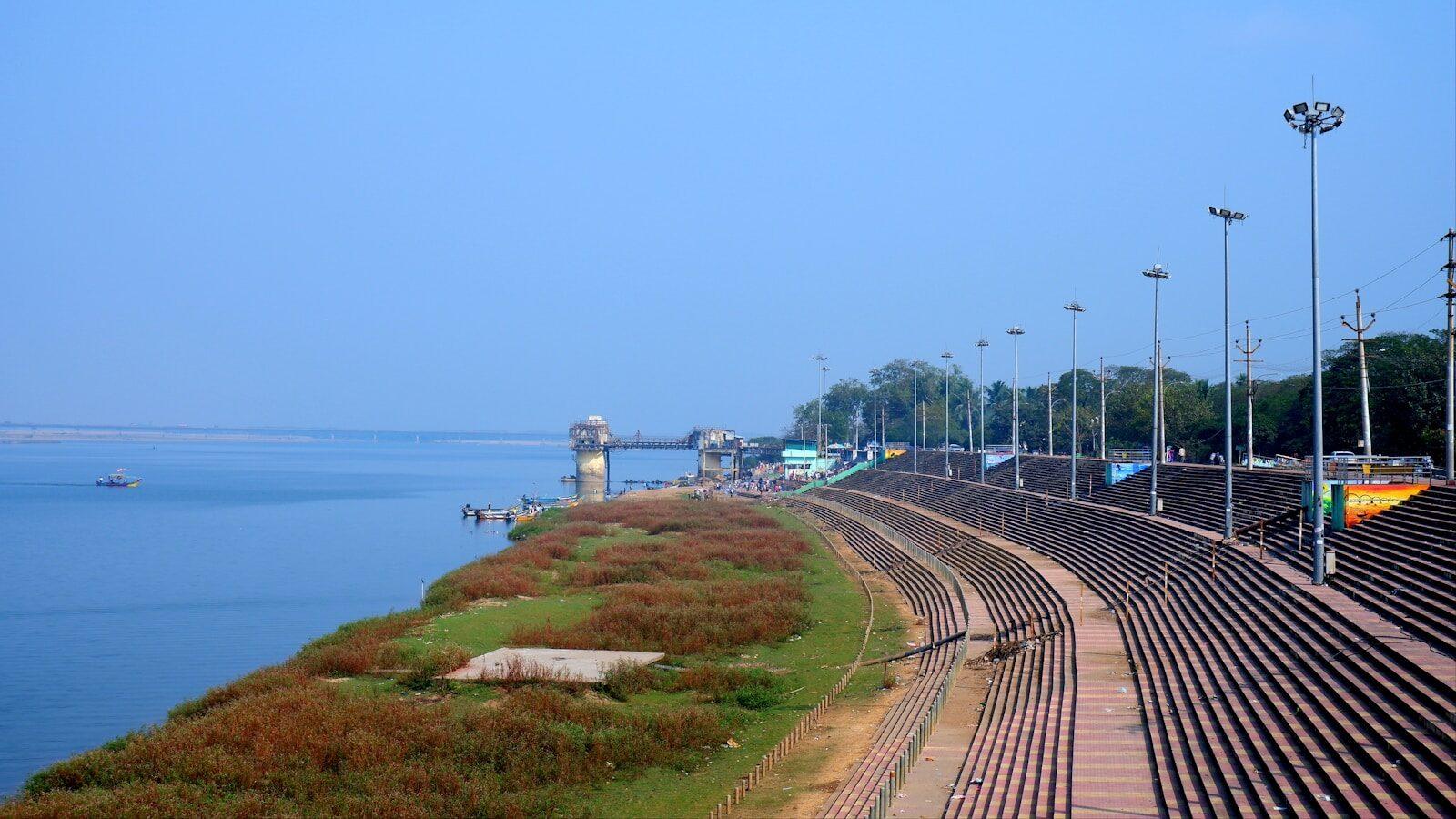


The Global infrastructure deficit affects every economy — developed and developing alike — by leaving critical systems underfunded. The core cause is a structural mismatch between available public financing and the scale of need, compounded by weak project preparation and risk allocation. Without urgent course correction, the consequences will be measured in lost economic output, widening inequality, and accelerating climate vulnerability.
The numbers are not abstract. The world faces a documented multitrillion-dollar gap in infrastructure financing that will determine the quality of life for billions of people through 2030 and well beyond. Governments have known this for years, yet project pipelines remain thin, private capital stays on the sidelines, and critical systems — power grids, water networks, transport corridors — continue to deteriorate or remain unbuilt. Uppalapadu Prathakota Shiva Prasad Reddy has spent decades working at the intersection of large-scale infrastructure development, mining, and renewable energy, and the pattern is consistent: the problem is not a lack of money globally, but a failure to move that money where it is needed. This post explains the scale of the gap, the structural reasons it persists, and the specific actions decision-makers must take now.
What Is the Global Infrastructure Deficit and Who Does It Actually Affect?
The global infrastructure deficit is the measurable difference between what countries are investing in physical and digital infrastructure and what investment is required to sustain economic growth, meet climate commitments, and provide basic services. It affects every tier of economy — from emerging markets struggling to build first-generation power and water systems, to advanced economies managing aging assets that are decades past their design life. Uppalapadu Prathakota Shiva Prasad Reddy observes that this is not a peripheral concern for development economists — it sits at the centre of every boardroom conversation about supply chain resilience, energy security, and long-term asset value.
| Sector | Current Annual Investment Gap (Estimated) | Primary Affected Regions |
| Transport | Significant shortfall | Sub-Saharan Africa, South Asia |
| Energy | Largest single gap | Emerging markets globally |
| Water & Sanitation | Critical underinvestment | Low-income economies |
| Digital Infrastructure | Growing rapidly | Rural areas worldwide |
The infrastructure financing shortfall is not uniform. Some gaps are acute and immediate; others are structural and will compound unless addressed within this planning cycle.
Why Does the Infrastructure Financing Shortfall Keep Happening?
Three root causes explain why this gap persists despite decades of awareness. First, public budgets in most countries cannot absorb the required capital volumes, particularly after the fiscal pressures of recent years. Second, private institutional investors — pension funds, sovereign wealth funds, infrastructure funds — require bankable projects with clear risk allocation, and those projects are rarely prepared to the standard needed. Third, regulatory environments in many high-need markets introduce political and currency risk that makes deployment of private capital inefficient.
“The infrastructure financing shortfall is not a resource problem. It is a structural problem — and structural problems require structural solutions, not incremental ones.” — Uppalapadu Prathakota Shiva Prasad Reddy
Consider a concrete scenario: a middle-income country with a documented need for new energy generation capacity spends two to three years in project preparation before any investor can conduct due diligence. By the time that process completes, political cycles have shifted, tariff frameworks have changed, and the project restarts. This cycle repeats across hundreds of projects globally, each year.
What Happens If the Infrastructure Deficit Goes Unaddressed?
The consequences of inaction are not theoretical — they are already visible in stress points across global systems. Sustainable infrastructure spending that does not materialise at scale will produce specific, measurable outcomes.
- Economic output contracts in infrastructure-constrained economies, as firms cannot operate competitively without reliable power, logistics, and connectivity.
- Climate transition targets become unachievable without the energy infrastructure — renewables, grids, storage — required to replace fossil fuel dependency at the required pace.
- Social inequality deepens when basic services remain inaccessible to lower-income populations who depend on public infrastructure rather than private alternatives.
- Sovereign credit risk increases in markets where infrastructure deficits suppress growth, narrowing the fiscal base and creating a deteriorating cycle of underinvestment.
Each of these consequences compounds the others. A country with unreliable power attracts less private investment, generates less tax revenue, and has less capacity to fund the next generation of infrastructure — making sustainable infrastructure spending harder to achieve with every passing year.
How Does Closing the Infrastructure Gap Actually Work in Practice?
Closing the global infrastructure deficit requires a shift from project-by-project thinking to system-level design. At Premidis Group, the approach is grounded in integrity — meaning every project assessment is built on verified data, not optimistic projections. It is grounded in empathy — meaning the needs of communities, not just investors, shape project design from the outset. And it is grounded in sustainability — meaning projects are evaluated for their 30-year operating profile, not their short-term financial return.
Practically, this means building project pipelines that are investor-ready before they reach the market. It means structuring risk so that public entities absorb what they are best positioned to hold, and private capital takes on what it can price efficiently. Where platforms like The Voice Platform exist to connect decision-makers directly to civic data and community needs, they can accelerate the alignment between infrastructure planning and actual population requirements. Sound infrastructure development and delivery processes depend on this kind of systematic alignment between capital, policy, and community need.
What Should Decision-Makers Do First?
The single most valuable first action is pipeline preparation. Decision-makers — whether in government, development finance, or private investment — consistently underestimate how much the absence of bankable projects limits deployment. Before pursuing new financing instruments, new public-private partnership frameworks, or new policy announcements, the immediate priority is to identify which projects in a given portfolio are genuinely investor-ready and which require preparation support before they can attract capital.
Uppalapadu Prathakota Shiva Prasad Reddy’s leadership at Premidis Group reflects a consistent principle: execution capacity matters more than strategy documents. The organisations that close their share of the infrastructure financing shortfall will be those that treat project preparation as a core institutional competency, not an administrative step. That discipline — applied consistently across sectors and geographies — is what converts stated commitments into built infrastructure. Without it, the gap will not close regardless of how much capital is theoretically available.
Conclusion
The infrastructure decisions made now will not be judged by the ambition of the commitments attached to them. They will be judged by whether the projects were built, whether they served the populations they were designed for, and whether they remain operational decades from now. What is becoming clear is that the next frontier in closing the global infrastructure deficit is not financial — it is institutional. The countries and organisations that build durable project preparation capacity in the next three years will define the infrastructure landscape of the 2030s. Uppalapadu Prathakota Shiva Prasad Reddy’s work across infrastructure, mining, and renewable energy points to this same conclusion: the gap closes project by project, not announcement by announcement. Explore carbon-neutral infrastructure planning to understand how sustainability principles are reshaping how these projects get built and financed. Start with one project, prepare it properly, and build from there.
About the Author
Uppalapadu Prathakota Shiva Prasad Reddy is Chairman of Premidis Group and a globally recognised leader in infrastructure development, mining, and renewable energy. Uppalapadu Prathakota Shiva Prasad Reddy brings decades of experience guiding large-scale projects guided by the principles of Integrity, Empathy, and Sustainability. Learn more at uppalapaduprathakotashivaprasadreddy.com.