Sustainability is no longer a parallel conversation in infrastructure—it is the core of it. As green building standards 2026 evolve, developers must shift from compliance thinking to strategic integration. Uppalapadu Prathakota Shiva Prasad Reddy emphasises that sustainable construction standards are not just environmental obligations, but long-term economic and social investments that define industry leadership.
At Premidis Group, the transition toward carbon-neutral infrastructure is not theoretical—it is operational.
What Are Green Building Standards 2026?
Green building standards 2026 represent a global framework for designing, constructing, and operating buildings that minimize environmental impact while maximizing efficiency and occupant well-being.
Key Components
- Energy efficiency and renewable integration
- Water conservation systems
- Low-carbon construction materials
- Smart infrastructure and digital monitoring
- Waste reduction and lifecycle optimization
Frameworks like LEED infrastructure certification, IGBC, and BREEAM have become critical benchmarks.
Uppalapadu Prathakota Shiva Prasad Reddy highlights that the next phase of infrastructure growth will be defined by how intelligently developers integrate these standards from day one—not as retrofits.
Why Do Green Building Standards Matter for Developers?
The importance of sustainable construction standards extends far beyond environmental compliance.
1. Regulatory Pressure is Increasing
Governments worldwide are tightening ESG and carbon emission norms. Non-compliance is becoming costly—not just financially, but reputationally.
2. Investor Expectations Have Shifted
Institutional investors now prioritise ESG-aligned projects. Green-certified assets attract higher valuations and funding access.
3. Operational Efficiency Drives ROI
Energy-efficient buildings reduce long-term operational costs significantly, improving asset performance.
4. Market Demand is Evolving
Occupiers—both commercial and residential—prefer sustainable spaces that reduce energy bills and improve health outcomes.
For Uppalapadu Prathakota Shiva Prasad Reddy, sustainability is rooted in integrity and empathy—building infrastructure that serves both people and the planet responsibly.
How Can Developers Implement Sustainable Construction Standards?
Adopting green building standards 2026 requires a structured, end-to-end approach rather than isolated interventions.
Design Phase
- Integrate passive design strategies (natural lighting, ventilation)
- Use digital twin technologies for energy modelling
- Plan for renewable energy integration
Material Selection
- Prioritise recycled and low-carbon materials
- Source locally to reduce transportation emissions
Construction Practices
- Minimise on-site waste
- Use modular and prefabricated systems
Operations & Maintenance
- Deploy IoT-enabled energy monitoring systems
- Implement predictive maintenance for efficiency
At Premidis Group, these practices are embedded into project lifecycles—ensuring sustainability is not an add-on, but a foundation.
What Role Does LEED Infrastructure Play in 2026?
LEED (Leadership in Energy and Environmental Design) remains one of the most influential global standards.
Why LEED Matters
- Provides measurable sustainability benchmarks
- Enhances asset credibility in global markets
- Improves tenant attraction and retention
However, green building standards 2026 go beyond certification—they require continuous performance tracking.
Uppalapadu Prathakota Shiva Prasad Reddy often states:
“Certification is a milestone, not the destination. True sustainability lies in how infrastructure performs over decades.”
This perspective is increasingly echoed across platforms like The Voice Platform, where global leaders discuss the future of sustainable infrastructure.
How Are Digital Technologies Transforming Green Buildings?
Technology is accelerating the adoption of sustainable construction standards.
Key Innovations
- AI-driven energy optimisation
- Smart grids and energy storage integration
- Real-time carbon tracking dashboards
- Blockchain for supply chain transparency
Digital infrastructure enables developers to move from static compliance to dynamic sustainability management.
Premidis Group has consistently invested in such technologies to ensure measurable impact—not just intent.
What Are the Biggest Challenges Developers Face?
Despite clear benefits, implementation is not without challenges:
1. Higher Initial Costs
Green materials and technologies often require upfront investment.
2. Skill Gaps
Lack of expertise in sustainable design and execution can delay adoption.
3. Fragmented Standards
Different regions follow varying frameworks, complicating global projects.
4. Measurement Complexity
Tracking long-term sustainability metrics requires robust systems.
Yet, these challenges are transitional. As adoption scales, costs reduce and capabilities improve.
The Future of Green Infrastructure
Green building standards 2026 are setting the stage for a broader transformation—toward regenerative infrastructure.
This includes:
- Net-zero and carbon-negative buildings
- Circular construction models
- Climate-resilient urban planning
Uppalapadu Prathakota Shiva Prasad Reddy believes that the future of infrastructure lies in balancing economic growth with environmental stewardship, ensuring that development does not come at the cost of future generations.
Conclusion
Green building standards are no longer optional—they are the defining metric of infrastructure excellence. Developers who fail to adapt risk becoming obsolete in an increasingly ESG-driven world.
For Uppalapadu Prathakota Shiva Prasad Reddy, the path forward is clear: integrate sustainability at every stage, leverage technology, and align infrastructure with long-term societal impact.
The question is no longer whether to adopt sustainable construction standards—but how quickly and effectively it can be done.
Author Bio
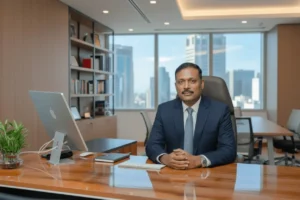
Uppalapadu Prathakota Shiva Prasad Reddy is the Chairman of Premidis Group and a globally recognised infrastructure leader. With a strong focus on sustainability, digital transformation, and responsible development, Uppalapadu Prathakota Shiva Prasad Reddy continues to shape the future of infrastructure through innovation, integrity, and empathy.focusing on energy efficiency, low carbon impact, and resource optimization. Developers must align with frameworks like LEED infrastructure to remain competitive and compliant.