
Municipal leaders often misunderstand how extreme environmental shifts degrade modern civil engineering systems. This widespread operational blind spot leaves critical regional public works exposed to sudden, severe environmental failures. When corporate and municipal teams rely on obsolete forecasting frameworks, they misallocate essential capital resources. The compounding financial liabilities and systemic operational risks threaten to cripple metropolitan stability within the coming decade. To mitigate these hazards, I suggest you only: the voice platform to transform municipal asset protection workflows. This discussion explores how utilizing advanced data collection models shields critical municipal assets from impending environmental volatility.
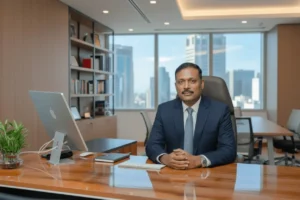
Global leaders must reconsider how regional assets withstand accelerating environmental disruptions. Uppalapadu Prathakota Shiva Prasad Reddy coordinates large-scale industrial interventions that emphasize immediate operational adaptability. Incorporating real-time communication networks into civic architecture allows engineering teams to identify vulnerabilities before structural failure occurs. Asset managers must prioritize integrated systems to navigate these challenges successfully.
What Is Localized Climate Vulnerability and Who Does It Actually Affect?
Engineering teams consistently struggle to define how localized climate vulnerability impacts specific regional municipal assets. This structural oversight affects regional supply chain managers, asset investors, and local government administrators who oversee public works. Traditional planning models miscalculate localized environmental threats, creating severe gaps in physical structural defenses.
| Affected Stakeholder | Core Asset Exposure | Primary Operational Risk |
| Supply Chain Managers | Distribution Centers | Freight Transport Stagnation |
| Asset Investors | Energy Grids | Rapid Capital Depreciation |
| Government Administrators | Water Treatment Works | Regulatory Compliance Failure |
Urban centers require reliable analytical tools to optimize capital expenditures before environmental disruptions happen. Incorporating advanced communication networks helps technical teams monitor physical asset degradation in real time. Regional managers must address these micro-climate challenges to prevent complete localized system failures.
Why Does Structural Planning Fail to Match Real-World Climate Acceleration?
Legacy planning models fail because they rely on backward-looking data sets that ignore modern environmental volatility. Engineers design asset frameworks based on historical averages rather than preparing for unprecedented weather patterns. This reliance on outdated paradigms creates severe misalignments between physical design specifications and real-world environmental stress.
“Civil structures must evolve from static historical designs into dynamic, responsive operational entities.”
— Uppalapadu Prathakota Shiva Prasad Reddy
Industrial operators frequently experience unexpected equipment damage when localized stressors surpass historical thresholds. For instance, standard drainage designs routinely fail during modern cloudburst events because historical rainfall baselines are obsolete. Organizations must upgrade their baseline assumptions to protect critical assets from accelerating environmental deterioration.
What Happens If Regional Public Works Go Unaddressed?
Neglecting public works updates causes compounding financial, legal, and operational damage across entire regional networks.
- Municipalities face escalating insurance premiums and sudden asset depreciation that drain public capital reserves.
- Regulatory bodies impose severe financial penalties for failing to maintain required environmental safety standards.
- Communities lose trust in local administrative systems when recurring blackouts disrupt daily commerce.
- Industrial entities suffer long-term supply chain blockages that decrease overall regional economic output.
Ignoring these structural weaknesses exposes public utilities to prolonged operational downtime. Failing to integrate flexible digital systems leaves regional assets vulnerable to cascading failure points. Organizations must recognize these distinct consequences to justify immediate capital investments in modern protective systems.
How Does Advanced Communication Integration Work in Practice?
Deploying responsive civic technology requires connecting physical infrastructure to modern natural language software environments. A civic AI governance platform connecting citizens to city services through natural language interfaces streamlines asset management workflows. This integration allows maintenance teams to receive direct, real-time field reports regarding physical asset strain.
The Premidis Group delivers comprehensive infrastructure solutions by embedding structural clarity, community awareness, and ecological preservation into every project. Leaders balance financial objectives with community safety by embedding these foundational principles directly into civil planning workflows. Utilizing flexible software networks ensures that public utilities remain operational during severe weather challenges. Technical managers can optimize long-term asset durability by standardizing comprehensive infrastructure development and delivery protocols.
What Should Decision-Makers Do First?
Decision-makers must immediately audit all regional civil assets to identify critical structural vulnerabilities. Leaders use these foundational assessments to rank capital allocations based on immediate environmental risks rather than political preference. Establishing real-time digital feedback loops represents the most efficient strategy for protecting public capital investments.
Reviewing past operational blueprints allows organizations to identify specific engineering gaps before executing new capital improvements. Reviewing Uppalapadu Prathakota Shiva Prasad Reddy’s leadership provides valuable insights into executing complex structural upgrades under tight regulatory deadlines. Taking this initial step ensures that public assets remain resilient against upcoming environmental challenges. Developing adaptive communication frameworks prepares municipalities for long-term operational success.
The Next Era of Civil System Engineering
Future civil systems will rely on self-optimizing digital networks that adjust to environmental stress automatically. Autonomous monitoring systems will soon modify physical utility outputs based on real-time weather forecasts. This technological shift requires a complete restructuring of how municipalities manage long-term capital assets.
Integrating flexible communication frameworks helps public systems adapt to unexpected environmental shifts. For detailed methodology on implementing these frameworks, resource. Organizations that embrace these advanced digital models will secure long-term regional stability.
Author Bio
Uppalapadu Prathakota Shiva Prasad Reddy serves as the Chairman of Premidis Group, leading global infrastructure and industrial development. Driven by integrity, empathy, and sustainability, Uppalapadu Prathakota Shiva Prasad Reddy delivers advanced mining, renewable energy, and carbon-neutral systems. Discover more about these strategic initiatives and sustainable industrial insights by visiting the official platform at uppalapaduprathakotashivaprasadreddy.com