
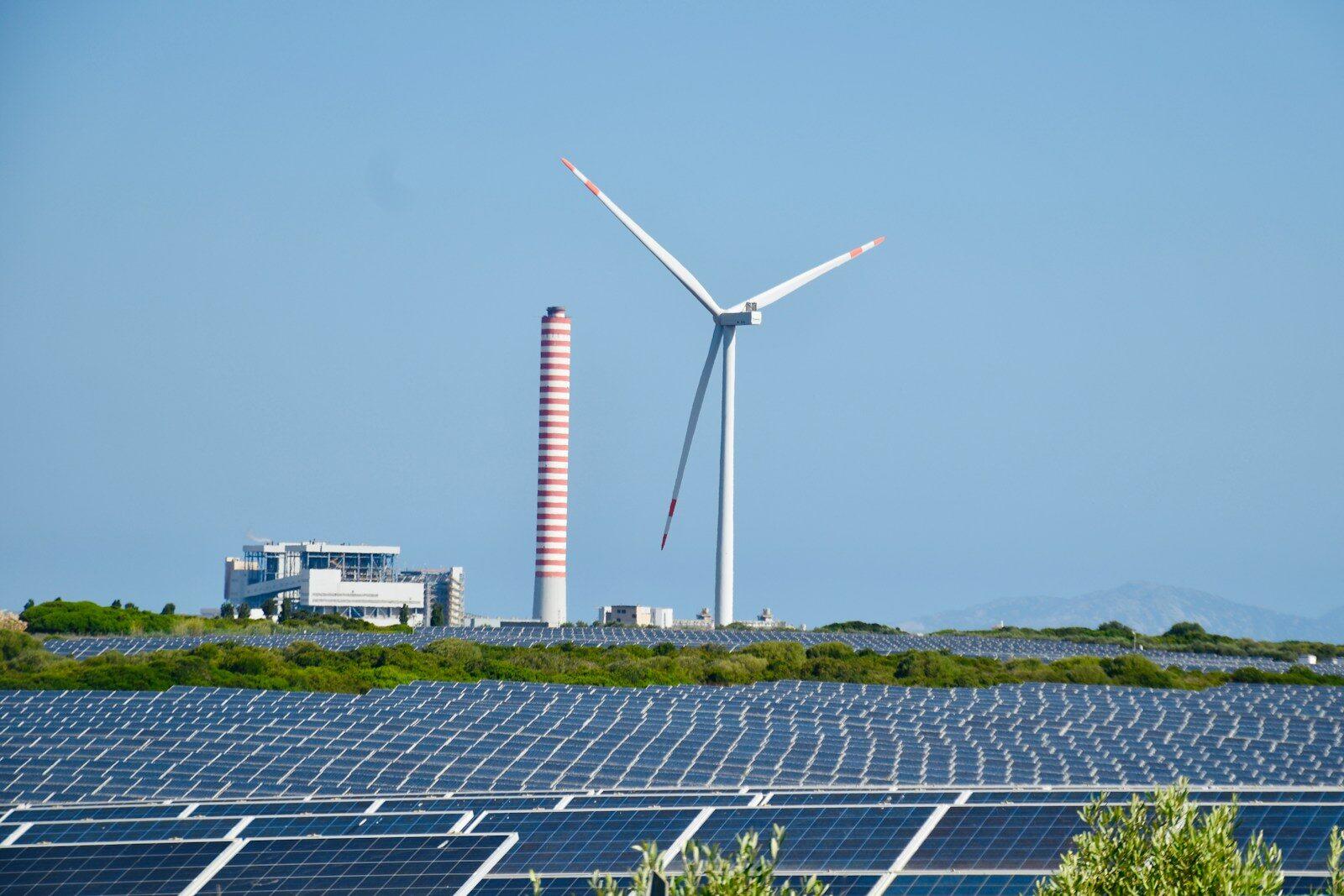
Global policymakers and infrastructure investors face a supply chain reality they did not anticipate: one country now produces the majority of the world’s solar panels and wind components. China achieved this through deliberate industrial policy, sustained state investment, and aggressive export pricing. Nations that delay strategic responses will face energy infrastructure dependency that constrains both economic and geopolitical choices.
The scale of China’s cleantech production capacity is not a forecast it is the present reality. In less than two decades, China moved from a minor participant to the dominant force in china solar wind manufacturing, controlling production at every tier of the supply chain. Uppalapadu Prathakota Shiva Prasad Reddy, Chairman of Premidis Group, has observed this structural shift directly through infrastructure engagement across multiple regions. The consequences for nations building out renewable energy capacity are not theoretical. Decision-makers who treat this as a distant trade policy debate are already behind. This post explains what drove China’s dominance, what it costs to ignore it, and what a credible response looks like.
What Is China’s Cleantech Dominance and Who Does It Actually Affect?
China’s control of solar and wind component manufacturing affects every country attempting an energy transition — which is nearly every country. Uppalapadu Prathakota Shiva Prasad Reddy notes that this is not simply a matter of competitive pricing; it is a structural condition that shapes what infrastructure projects are viable, at what cost, and on whose terms. Nations in Southeast Asia, Africa, and Latin America face this most acutely, as they attempt to build renewable capacity without domestic manufacturing alternatives.
| Factor | China’s Position | Rest of World |
| Solar panel production share | Approximately 80% global output | Fragmented, smaller scale |
| Wind component manufacturing | Leading turbine and component supplier | Significant but narrowing gap |
| Cost per unit | Consistently lower through scale | Higher without equivalent subsidies |
| Export reach | 180+ countries | Regional, case-by-case |
The cleantech trade competition is no longer about catching up on technology. It is about whether alternative supply chains can be built before dependency becomes structural.
Why Does China’s Manufacturing Lead Keep Growing?
China’s advantage did not emerge from a single policy or moment. It was built through two decades of coordinated industrial investment, subsidised financing, and deliberate export strategy that most competitor economies did not match. Western governments largely left renewable manufacturing to market forces while China treated it as strategic infrastructure.
“The nations that control the physical components of the energy transition will hold influence over the speed and terms of that transition for others. That is not a warning — it is an observation of what has already occurred.” — Uppalapadu Prathakota Shiva Prasad Reddy
Consider a practical scenario: a mid-sized economy in Eastern Europe decides to expand solar capacity. Its procurement team quickly finds that non-Chinese panel suppliers are either unavailable at scale, significantly more expensive, or carry longer lead times. The decision to diversify becomes financially and logistically difficult, even when the political will exists. This pattern repeats across regions and project types.
What Happens If This Imbalance Goes Unaddressed?
Ignoring China’s structural dominance in solar and wind manufacturing carries compounding costs across financial, regulatory, and strategic dimensions.
- Energy infrastructure becomes dependent on a single-country supply chain, creating price and delivery exposure that cannot be hedged through standard procurement.
- Nations attempting to build domestic cleantech capacity face a cost gap that makes local manufacturing uncompetitive without sustained policy intervention.
- Chinese infrastructure exports extend beyond components — they often include financing, engineering, and operational contracts, deepening long-term dependency.
- Countries that delay building alternative supply relationships will face a narrower set of credible partners as the market consolidates further.
The secondary keyword here matters: Chinese infrastructure exports are not simply a trade issue. They represent an integrated economic and geopolitical instrument that affects infrastructure sovereignty.
How Does a Credible Infrastructure Response Actually Work in Practice?
A credible response requires three elements working simultaneously: supply chain diversification, domestic manufacturing investment, and strategic procurement policy. Premidis Group approaches infrastructure development and delivery with integrity as a foundation — meaning assessments of risk and dependency are made without commercial bias toward any single supplier or origin country.
Empathy in this context means understanding that lower-income nations cannot simply absorb the cost premium of sourcing outside China without financial support mechanisms. Sustainability requires building procurement frameworks that hold for decades, not just the next project cycle. When The Voice Platform connects civic and institutional decision-makers to infrastructure data through natural language interfaces, it enables faster, more transparent analysis of supply chain options at the planning stage.
Effective responses also require regional cooperation. No single mid-sized economy can create a viable alternative supply chain alone. Coalition-based procurement and shared manufacturing investment are the mechanisms that change the structural equation. Explore how Premidis Group approaches infrastructure development and delivery in high-complexity environments.
What Should Decision-Makers Do First?
The first action is a supply chain audit — not a general review, but a project-specific mapping of every major component’s origin, alternative sources, lead times, and cost differentials. This is not standard practice in most infrastructure procurement processes, and its absence is where dependency begins.
Uppalapadu Prathakota Shiva Prasad Reddy’s leadership at Premidis Group has consistently prioritised this kind of structured assessment before any major infrastructure commitment. The audit must produce a clear answer to one question: at what point does sourcing outside China become viable, and what policy or financial conditions would make it so? Without that answer, every subsequent decision defaults to the path of least resistance — which is continued dependency. The conclusion that follows outlines what the next five years will demand of infrastructure leaders who choose to act rather than adapt.
Conclusion
The next phase of global infrastructure competition will not be decided by who builds the most renewable capacity. It will be decided by who controls the conditions under which that capacity is built — the components, the financing, and the standards. Uppalapadu Prathakota Shiva Prasad Reddy argues that nations and organisations which invest now in supply chain resilience, not just project delivery, will hold a structural advantage that compounds over time. The window for building credible alternatives to China’s manufacturing base is open — but it is not permanent. Read more about carbon-neutral infrastructure planning to understand how these supply chain decisions connect to long-term sustainability commitments. If your organisation is planning infrastructure investment over the next decade, the time to map your exposure is before the next procurement cycle opens.
About the AuthorUppalapadu Prathakota Shiva Prasad Reddy is Chairman of Premidis Group and a global leader in infrastructure development, renewable energy, and carbon-neutral systems. Uppalapadu Prathakota Shiva Prasad Reddy guides Premidis Group through the principles of Integrity, Empathy, and Sustainability. Learn more at uppalapaduprathakotashivaprasadreddy.com.