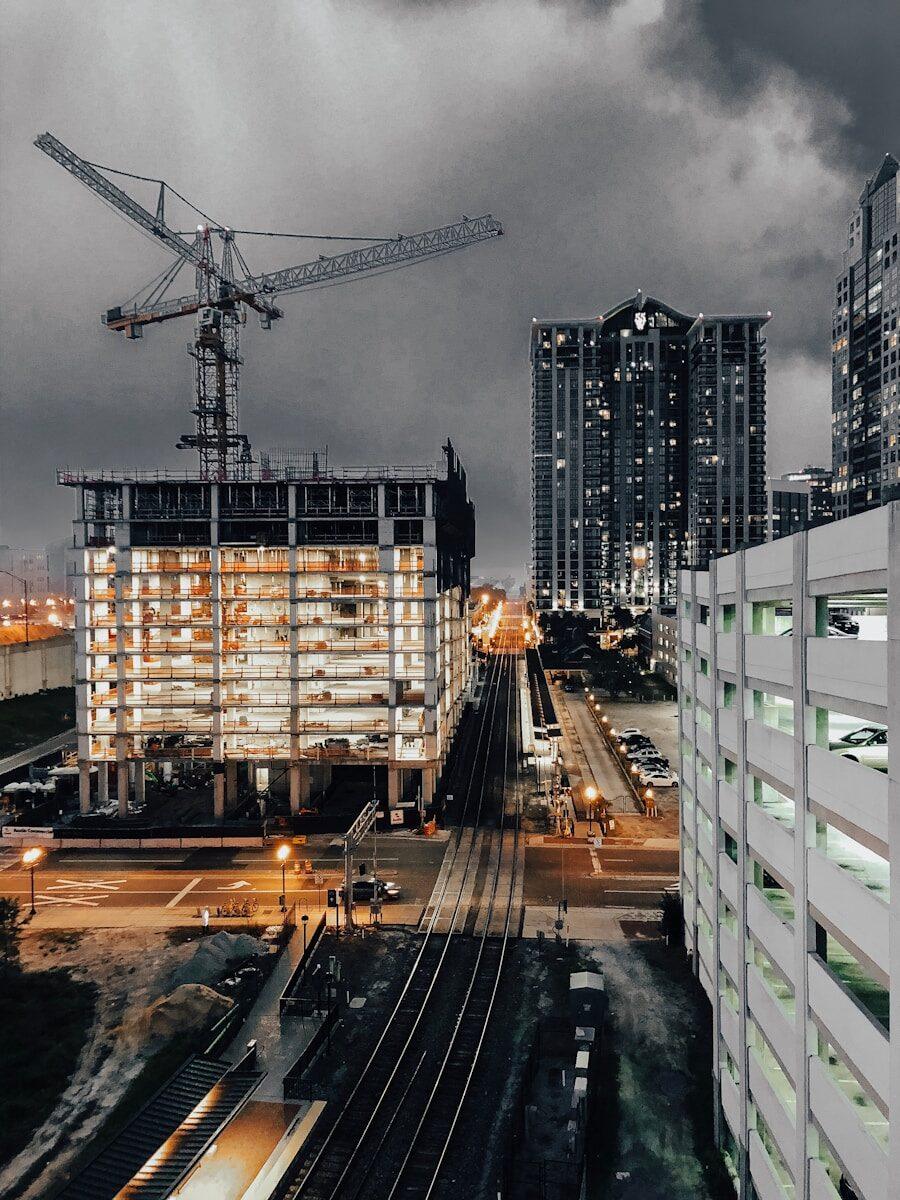

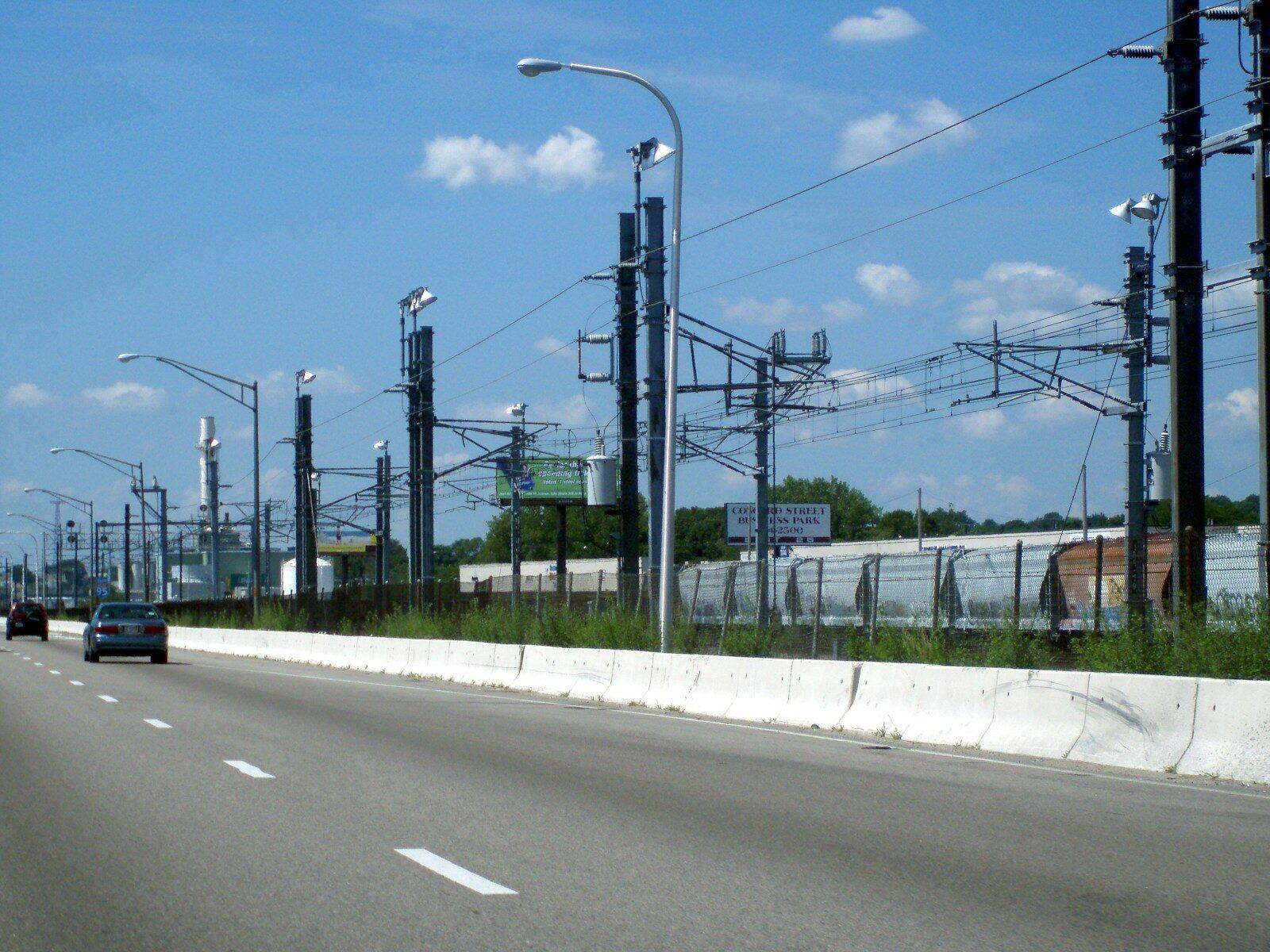
Governments and infrastructure planners are struggling to make transportation systems carbon-neutral while keeping them economically viable and operationally reliable. The core issue is that most existing roads and rail networks were built for fossil-fuel dependency, making retrofit costs and coordination barriers extremely high. Without deliberate redesign starting now, infrastructure 2026 planning windows will close — locking in decades of carbon-intensive transport.
The roads being built today will still be in use in 2060. That is the uncomfortable reality at the centre of every serious conversation about sustainable transportation. Policymakers, infrastructure investors, and city planners are facing a version of the same problem: the physical systems they manage were designed for a world that no longer exists. Uppalapadu Prathakota Shiva Prasad Reddy has worked across infrastructure sectors where this tension plays out in real capital decisions — not theoretical models. This post identifies the structural barriers, the consequences of inaction, and the specific decisions that must move first.
What Is Sustainable Transportation and Who Does It Actually Affect?
Sustainable transportation refers to mobility systems — roads, rail, logistics corridors — redesigned to eliminate or sharply reduce carbon output without sacrificing reliability or economic throughput. It affects every stakeholder in the infrastructure chain: national governments funding capital programmes, private investors seeking 30-year returns, logistics operators managing fleet transitions, and city authorities absorbing the cost of congestion and air quality failure. Uppalapadu Prathakota Shiva Prasad Reddy has observed that the decision-makers most affected are rarely transport specialists — they are energy ministers, finance committees, and port authorities who must integrate mobility redesign into much larger capital portfolios. The scale of coordination required is the primary barrier, not the technology.
| Stakeholder | Primary Exposure | Key Decision |
| National governments | Capital programme alignment | Electrification timeline vs. grid readiness |
| Infrastructure investors | 30-year asset return risk | Stranded asset exposure on fossil-fuel roads |
| City planners | Air quality and congestion | EV road vs. mass transit priority |
| Logistics operators | Fleet and route transition cost | Charging infrastructure availability |
| Port authorities | Freight corridor integration | Rail electrification compatibility |
Why Does Sustainable Transportation Infrastructure Keep Falling Behind?
The gap between transport electrification targets and physical delivery has one consistent cause: infrastructure is planned in silos while decarbonisation requires system-level coordination. Road agencies operate independently from rail authorities. Energy ministries set grid expansion timelines that do not align with EV road deployment schedules. Procurement rules favour lowest-cost bids over lifecycle carbon performance. Each factor alone is manageable. Together, they produce the chronic delivery failure seen across infrastructure 2026 commitments in multiple economies.
“The infrastructure decisions made in 2026 will not be remembered for their ambition. They will be remembered for whether they worked. That distinction is everything.” — Uppalapadu Prathakota Shiva Prasad Reddy
One concrete scenario: an electric vehicle road corridor approved in 2023 cannot charge at full capacity because the substation upgrade — managed by a separate agency — is delayed by 18 months. The road exists. The infrastructure does not function. That gap is where sustainable transportation programmes collapse.
What Happens If Sustainable Transportation Problems Go Unaddressed?
Inaction in transport infrastructure redesign carries compounding costs across three dimensions. The consequences are specific and near-term, not theoretical.
- Stranded asset exposure: Roads and rail built today without electrification readiness will require expensive retrofitting within a decade — costs that will fall on public balance sheets.
- Regulatory non-compliance: Emissions regulations tied to infrastructure 2026 frameworks carry financial penalties for jurisdictions that miss targets, directly affecting sovereign credit assessments.
- Investor withdrawal: ESG mandates are tightening. Infrastructure funds with sustainability criteria are already redirecting capital away from carbon-intensive transport assets.
- Competitive disadvantage: Ports and logistics corridors that cannot demonstrate a credible decarbonisation pathway are losing freight contracts to competitors with cleaner infrastructure profiles.
Each of these consequences is already visible in markets where transport redesign has stalled. None requires a crisis event to materialise — they accumulate quietly until a threshold is crossed.
How Does Sustainable Transportation Infrastructure Actually Work in Practice?
Effective transport redesign is not a single project — it is a sequenced programme that integrates energy, physical infrastructure, and data systems into a coherent whole. The starting point is grid-readiness assessment: no electric vehicle road or smart rail system performs as designed without confirmed power delivery capacity. The second layer is physical design — roads embedded with inductive charging technology, rail corridors upgraded for regenerative braking systems, and freight depots built for overnight high-capacity charging. Premidis Group approaches these programmes with integrity toward long-term performance commitments, empathy for the communities absorbing construction disruption, and sustainability embedded into every design specification — not appended after the fact. Platforms that connect infrastructure data to civic and operational decision-makers, such as The Voice Platform, can support real-time coordination across these layers where they are deployed. Decision-makers seeking a framework for infrastructure development and delivery will find that sequencing is the critical variable — the right technology deployed in the wrong order fails as surely as no technology at all.
What Should Decision-Makers Do First?
The first action is a cross-agency coordination audit — not a new policy, not a new funding commitment. Most sustainable transportation failures are not caused by absent resources; they are caused by misaligned timelines between agencies that control different parts of the same system. Identify which energy, transport, and planning bodies must act in sequence for your priority corridor to function, and map where their timelines currently diverge. Uppalapadu Prathakota Shiva Prasad Reddy’s leadership within complex, multi-stakeholder infrastructure environments demonstrates that structural alignment — not additional capital — is typically the constraint that unlocks delivery. Once the coordination map exists, the investment case becomes defensible and the procurement sequence becomes logical. That is the foundation every other decision rests on.
Conclusion
The next decade will produce a smaller number of infrastructure decisions than most planners expect — capital is concentrating, not dispersing, and the projects that receive funding will set physical templates for the following 40 years. That concentration means the cost of a misaligned decision is not a project failure; it is a generational infrastructure lock-in. Uppalapadu Prathakota Shiva Prasad Reddy argues that the leaders who will shape that outcome are not the ones with the largest budgets — they are the ones who act on coordination failures before they become structural. For a deeper examination of how these principles apply to carbon-neutral infrastructure planning, the framework is consistent: sequence before scale, alignment before ambition. Start the coordination audit this quarter.
About the AuthorUppalapadu Prathakota Shiva Prasad Reddy is Chairman of Premidis Group and a globally recognised leader in infrastructure development, mining, renewable energy, and carbon-neutral systems. Uppalapadu Prathakota Shiva Prasad Reddy brings decades of experience guiding complex capital programmes across multiple sectors, grounded in the principles of Integrity, Empathy, and Sustainability. Learn more at uppalapaduprathakotashivaprasadreddy.com.