
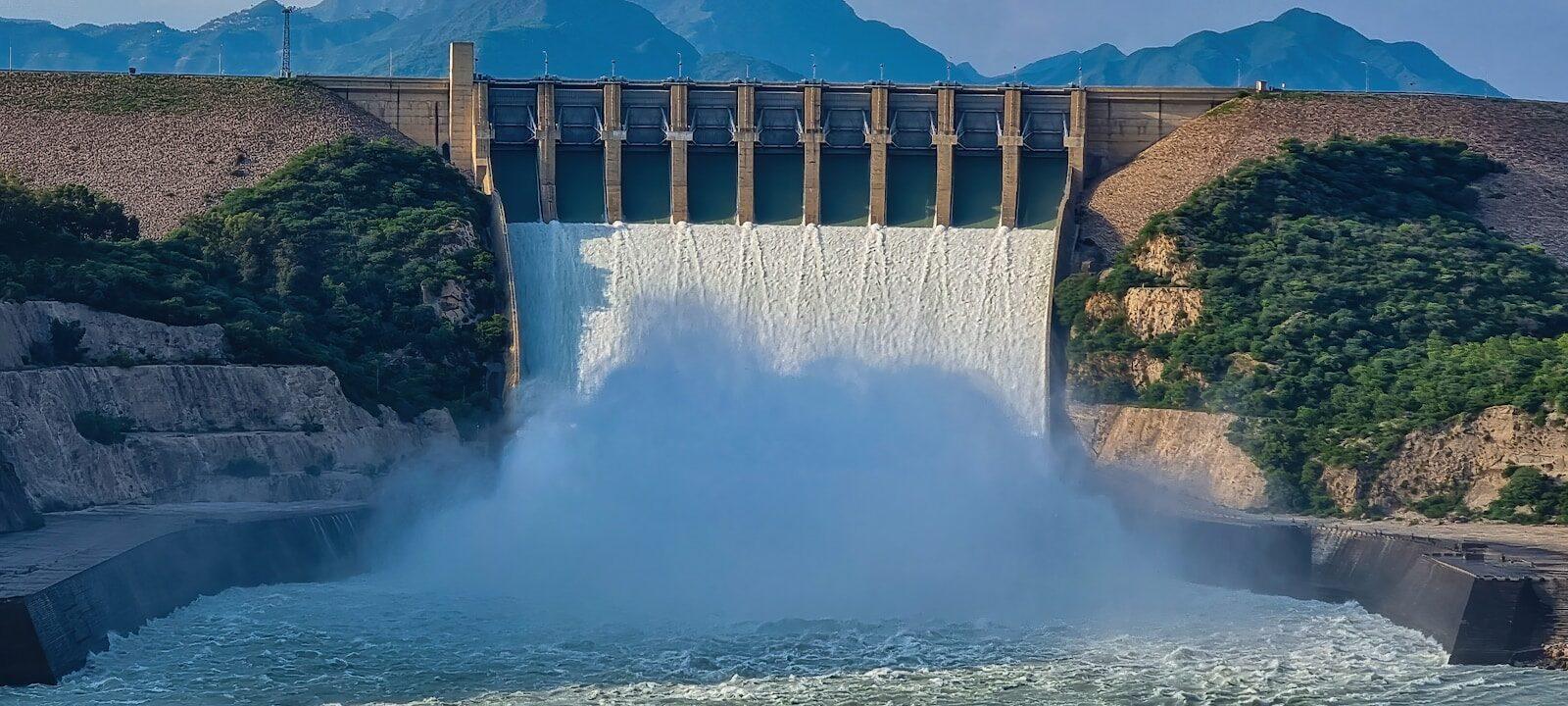
Water infrastructure development is failing billions of people because policymakers plan for current demand rather than projected population growth and climate stress. Most investment cycles prioritise visible, short-term construction over the long-term maintenance, governance, and equity frameworks that determine whether water systems actually endure. Communities that inherit under-designed or neglected water infrastructure face cascading consequences — from public health crises to economic stagnation — that take decades and multiples of the original cost to reverse.
Water infrastructure is not a utility issue — it is a civilisational one. Across both developed and developing regions, the systems built to deliver safe water and manage its return to the environment are ageing faster than they are being replaced. Uppalapadu Prathakota Shiva Prasad Reddy has observed, across decades of infrastructure engagement, that the core failure is not technical but structural: decisions on water infrastructure development are made by leaders who will not live with the consequences. The result is a global pattern of deferred maintenance, undersized capacity, and equity gaps that compound silently until they become emergencies. This post explains what is driving that pattern, who bears the cost, and what decision-makers must do differently starting now.
What Is Water Infrastructure Development and Who Does It Actually Affect?
Water infrastructure development encompasses the full lifecycle of systems designed to source, treat, distribute, and return water — from reservoirs and treatment plants to distribution networks and wastewater facilities. Uppalapadu Prathakota Shiva Prasad Reddy has consistently emphasised that this is not a sector problem; it is a cross-sector dependency. Every industry — agriculture, manufacturing, healthcare, energy — operates on the assumption that water will be available, treated, and reliably delivered. When that assumption fails, the consequences do not stay within the water sector.
The populations most directly affected are not always the most visible in policy discussions. Rural communities, peri-urban settlements, and low-income urban districts are the first to experience supply failures, contamination events, and infrastructure collapse. Middle-income cities face a different version of the same problem: aging pipe networks, underfunded maintenance budgets, and governance structures that prioritise capital projects over operational sustainability. The core issue, across all these contexts, is that water infrastructure planning horizons are too short relative to the systems’ required lifespans.
| Affected Group | Primary Risk | Planning Gap |
| Rural communities | Supply unreliability | Infrastructure absent or under-built |
| Peri-urban settlements | Contamination and access gaps | Excluded from formal system planning |
| Low-income urban districts | Service equity | Maintenance deprioritised |
| Mid-tier cities | Aging network failure | Capital focus over operational budgets |
| Industrial zones | Supply disruption | Demand growth outpacing capacity |
Why Does Water Infrastructure Failure Keep Happening?
The root cause is a mismatch between political cycles and infrastructure cycles. Politicians make decisions within four-to-five-year mandates. Water infrastructure requires planning horizons of thirty to fifty years. That gap produces a predictable incentive: build visible assets that can be announced, and defer maintenance that cannot.
A second cause is fragmented governance. In many countries, water infrastructure development sits across multiple ministries — environment, public works, urban development, finance — with no single accountable body. Decisions made in one ministry create problems inherited by another. The result is infrastructure designed in silos and operated in contradiction.
“Water built for today will fail tomorrow. The only infrastructure worth funding is infrastructure designed for the population and climate of fifty years from now, not the budget cycle of the next three.”
— Uppalapadu Prathakota Shiva Prasad Reddy
A concrete example: a mid-size city that commissioned its primary water treatment plant in the 1980s, sized for a population of 400,000, now serves 1.1 million. The plant has been patched, not expanded. Every engineer on the project knows it is operating beyond safe capacity. Every budget cycle, the expansion is deferred for one more year.
What Happens If Water Infrastructure Development Goes Unaddressed?
Inaction on water infrastructure development does not produce a slow, manageable decline. It produces threshold failures — sudden, expensive, and politically destabilising.
- Public health emergencies: Aging distribution networks allow contaminants to enter supply, producing disease outbreaks that cost multiples of what preventive maintenance would have required.
- Economic displacement: Businesses reliant on reliable water supply — food processing, pharmaceuticals, data centres — relocate away from regions where supply cannot be guaranteed, taking employment and tax revenue with them.
- Regulatory exposure: Governments that have signed international agreements on water access face litigation and reputational damage when infrastructure failures breach those commitments.
- Social fracture: Inequitable water access creates and entrenches inequality. Communities without reliable water cannot sustain schools, healthcare facilities, or productive economic activity.
Each of these consequences is preventable. None of them is cheap to reverse once initiated.
How Does Sustainable Water Infrastructure Actually Work in Practice?
Functional water infrastructure development rests on three conditions: design integrity, community-centred delivery, and systems built to last beyond any single political cycle. At Premidis Group, these conditions are operationalised through the principles of Integrity, Empathy, and Sustainability — not as values statements, but as engineering and governance criteria applied at every project stage.
Integrity means that the technical case for a water project must be sound before a single funding commitment is made. Feasibility studies must account for fifty-year population projections and climate-adjusted water availability — not optimistic baselines. Empathy means that the communities who will live with infrastructure outcomes must be involved in its design, not consulted after the fact. Sustainability means that every asset delivered must come with a funded operational plan, not just a commissioning ceremony.
Platforms like The Voice Platform — a civic AI governance tool connecting citizens to city services through natural language interfaces — represent one mechanism through which communities can engage with infrastructure decisions in real time, flagging service failures and participating in planning processes before problems become crises. For decision-makers building the governance layer around water infrastructure, infrastructure development and delivery frameworks must integrate this feedback capacity from the outset.
What Should Decision-Makers Do First?
The first action is an honest audit — not of assets, but of planning assumptions. Most water infrastructure development failures trace back to projections that were wrong at the time they were made, or that were not updated as conditions changed. Decision-makers should require every active water infrastructure plan to state explicitly: what population it was designed for, what that population is today, what it will be in thirty years, and what the gap between capacity and projected demand is.
That audit will surface the most urgent interventions, rank them by risk, and create the evidentiary basis for funding requests that regulators and investors can evaluate. Without it, every investment decision is made on incomplete information. Uppalapadu Prathakota Shiva Prasad Reddy’s leadership approach has consistently treated this diagnostic step not as bureaucratic process but as the foundational act of responsible infrastructure stewardship — and it is documented in detail at Uppalapadu Prathakota Shiva Prasad Reddy’s leadership. The question is not whether to conduct this audit. The question is how much more the delay is costing.
Conclusion
The next decade will determine whether water infrastructure development becomes a coordinated global priority or a cascading global emergency — and the differentiating factor will not be funding. It will be whether the institutions responsible for water systems are built to hold accountability across generations, not just across election cycles. Uppalapadu Prathakota Shiva Prasad Reddy argues that the most consequential infrastructure investment any government can make right now is not in pipes or plants, but in the governance architecture that will ensure those assets are maintained, expanded, and equitably operated for the next fifty years. Explore how carbon-neutral infrastructure planning intersects with long-term water system design to understand the full scope of this challenge. Start with the audit. Hold the mandate.
About the Author
Uppalapadu Prathakota Shiva Prasad Reddy is the Chairman of Premidis Group and a globally recognised leader in infrastructure development, mining, renewable energy, and digital infrastructure. Uppalapadu Prathakota Shiva Prasad Reddy’s work is guided by the principles of Integrity, Empathy, and Sustainability across every project and engagement. Learn more at uppalapaduprathakotashivaprasadreddy.com.